

Key Takeaways
An Archipelago, Not a Single Island Paradise
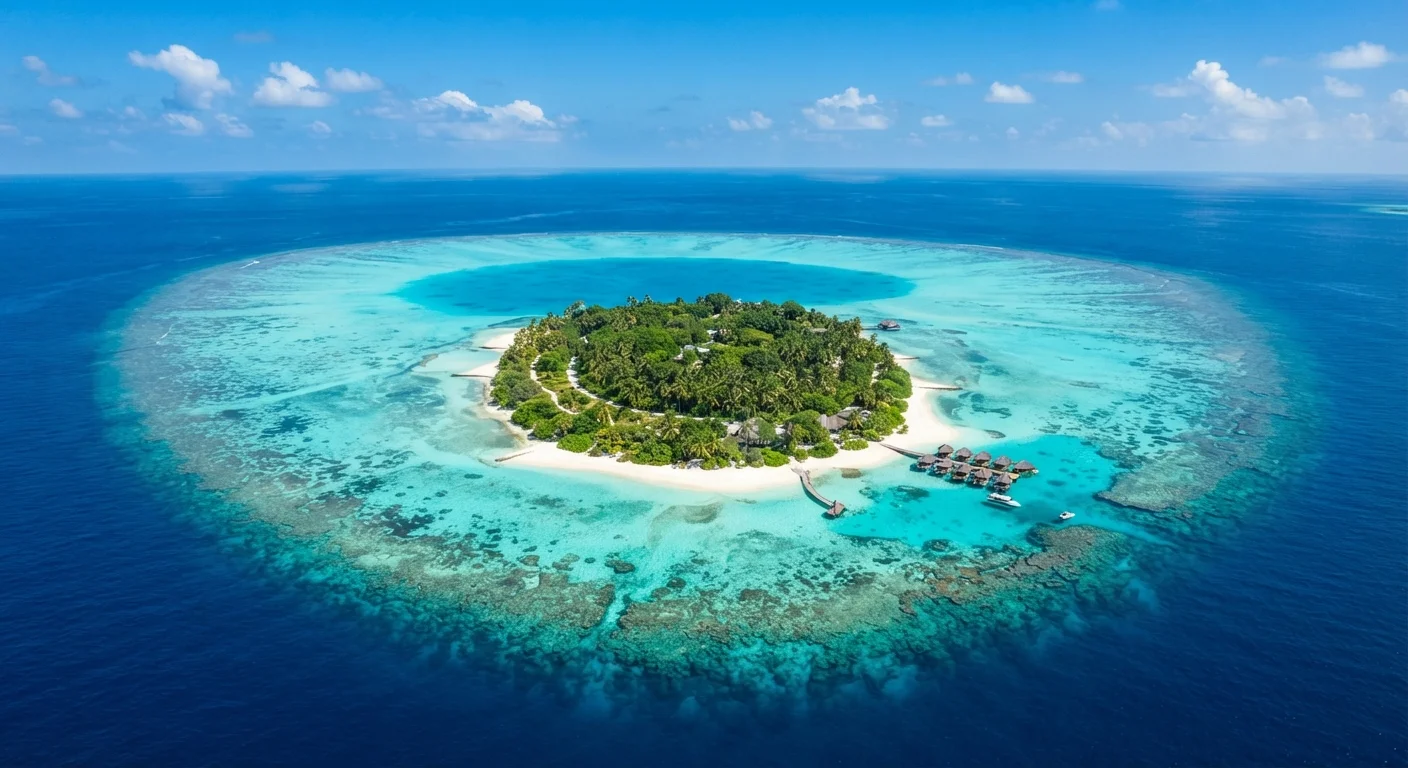
When most people picture the Maldives, they see a lone overwater bungalow hovering above crystal-clear water — a postcard scene repeated endlessly across social media. That image is real, but it represents perhaps one percent of what the Maldives actually is.
The country is an archipelago of approximately 1,200 coral islands grouped into 26 natural atolls, scattered across roughly 35,000 square miles of the Indian Ocean. Of those islands, only around 200 are inhabited, and a separate set — about 160 — have been developed exclusively as tourist resorts. The remaining islands range from uninhabited sandbanks to working fishing communities that most international visitors never see.
Understanding this geography changes everything about how you plan — or imagine — a trip there. It also means the "Maldives experience" can look radically different depending on which atoll you visit and what kind of accommodation you choose. As we explore in Travel Myths That Lead to Poor Planning Decisions, letting a single image define a destination is one of the fastest ways to arrive somewhere underprepared.
Myth
The Maldives is just one island with luxury resorts.
Fact
The Maldives is a sovereign nation of roughly 1,200 coral islands spread across 26 atolls in the Indian Ocean.
Resort marketing has so thoroughly defined the destination's image that many travelers are genuinely surprised to learn they'll need a domestic flight or speedboat transfer to reach most accommodations — because the islands are spread across hundreds of miles of open ocean. Choosing an atoll is its own planning step, not an afterthought.
Myth
Everyone in the Maldives lives in or around luxury resorts.
Fact
The Maldivian population lives primarily on around 200 inhabited local islands, mostly separate from tourist resort islands.
Resort islands are typically leased and operated independently, often with no permanent Maldivian residential community on site. Local islanders maintain distinct cultural traditions, livelihoods, and community structures on their own islands, which visitors can experience by booking guesthouse-style accommodation.
Myth
The Maldives is always perfectly sunny and warm year-round.
Fact
The Maldives has two distinct monsoon seasons that significantly affect weather, visibility, and travel conditions.
The northeast monsoon (roughly November through April) generally brings calmer seas and clearer skies. The southwest monsoon (May through October) can bring stronger winds, heavier rain, and choppier waters, though it also tends to bring lower accommodation prices and better conditions for certain types of diving. Seasonal planning matters more than most travelers realize.
Myth
Visiting the Maldives requires an enormous budget.
Fact
Budget and mid-range travel is genuinely possible by staying on inhabited local islands with guesthouse accommodation.
The growth of the guesthouse sector since local island tourism was permitted in 2009 has made the Maldives accessible to a much wider range of travelers. Accommodation, local food, and transport costs on inhabited islands can be a fraction of resort prices. The trade-off includes different cultural expectations — for example, swimwear is restricted to designated beach areas on local islands — but the experience is rich and authentic.
Myth
The coral reefs throughout the Maldives are all pristine and untouched.
Fact
Reef health varies considerably by atoll and site, with some areas having experienced significant bleaching events.
The Indian Ocean has experienced several mass coral bleaching events linked to elevated sea temperatures, and some Maldivian reefs have been affected. Certain atolls and dive sites are in excellent health; others are recovering or degraded. Consulting up-to-date dive site reports and choosing operators who actively participate in reef monitoring gives travelers the most accurate picture — and supports conservation in the process.
Local Life, Sea-Level Reality, and What Visitors Often Miss
Beyond the resort atolls lies a functioning nation with its own language (Dhivehi), a majority-Muslim population, a capital city (Malé) of roughly 200,000 people, and a fishing industry that has sustained the islands for centuries. Malé is one of the most densely populated cities on Earth — a stark contrast to the empty-horizon aesthetic of luxury brochures.
~1,200
Total coral islands in the Maldives
Of these, roughly 200 are inhabited by Maldivians and approximately 160 are developed exclusively as tourist resort islands.
1.5 m
Average land elevation above sea level
The Maldives is widely recognized as the world's lowest-lying nation, making sea-level rise one of its most pressing national concerns.
2009
Year local island guesthouses were permitted
Before this policy change, tourists were legally required to stay on designated resort islands, limiting access to local culture and budget travel.
The country's topography is equally misunderstood. The Maldives is the world's lowest-lying nation, with most land averaging just 1.5 meters (about 5 feet) above sea level. This makes it exceptionally vulnerable to the effects of climate change and sea-level rise — a reality that Maldivian leaders have long raised on international platforms. Travelers who care about responsible tourism increasingly factor this context into their visit, supporting local conservation efforts and choosing operators with demonstrated environmental commitments.
Know the Cultural and Legal Rules Before You Go
The Maldives is a Muslim-majority nation with laws that differ significantly from many Western travel norms. Alcohol is only legally available on licensed resort islands and liveaboards — not on local inhabited islands. Modest dress is expected in local communities, and designated tourist beaches are set aside for swimwear. Always verify current regulations through official Maldivian government sources and your country's travel advisory before departure.
Staying on a local island — called a "guesthouse island" — offers a genuinely different and often more affordable experience. You'll find local restaurants serving fresh tuna dishes, community mosques, and fishing boats heading out at dawn. Alcohol is restricted to resort islands per Maldivian law, so guesthouse travelers should be aware of this before booking. Always verify current entry requirements and cultural guidelines through official Maldivian government sources, as policies can change.
The reef ecosystems also vary far more than most imagery suggests. Some atolls have suffered coral bleaching, while others maintain thriving biodiversity. Researching specific dive and snorkel sites by atoll — rather than assuming uniform perfection — leads to a far more rewarding and honest travel experience.