

Key Takeaways
Patagonia
Patagonia is a vast, sparsely populated region at the southern tip of South America, shared between Argentina and Chile. It encompasses some of the planet's most dramatic scenery — from jagged mountain ranges and massive glaciers to windswept steppes and deep fjords. The region is widely regarded as one of the last great wilderness areas on Earth due to its sheer size, low human population, and largely intact ecosystems.
Patagonia has no single official boundary; geographically it generally refers to the area south of the Río Colorado in Argentina and the Biobío River region in Chile, covering roughly 400,000 square miles combined.
A Landscape Built on Extremes
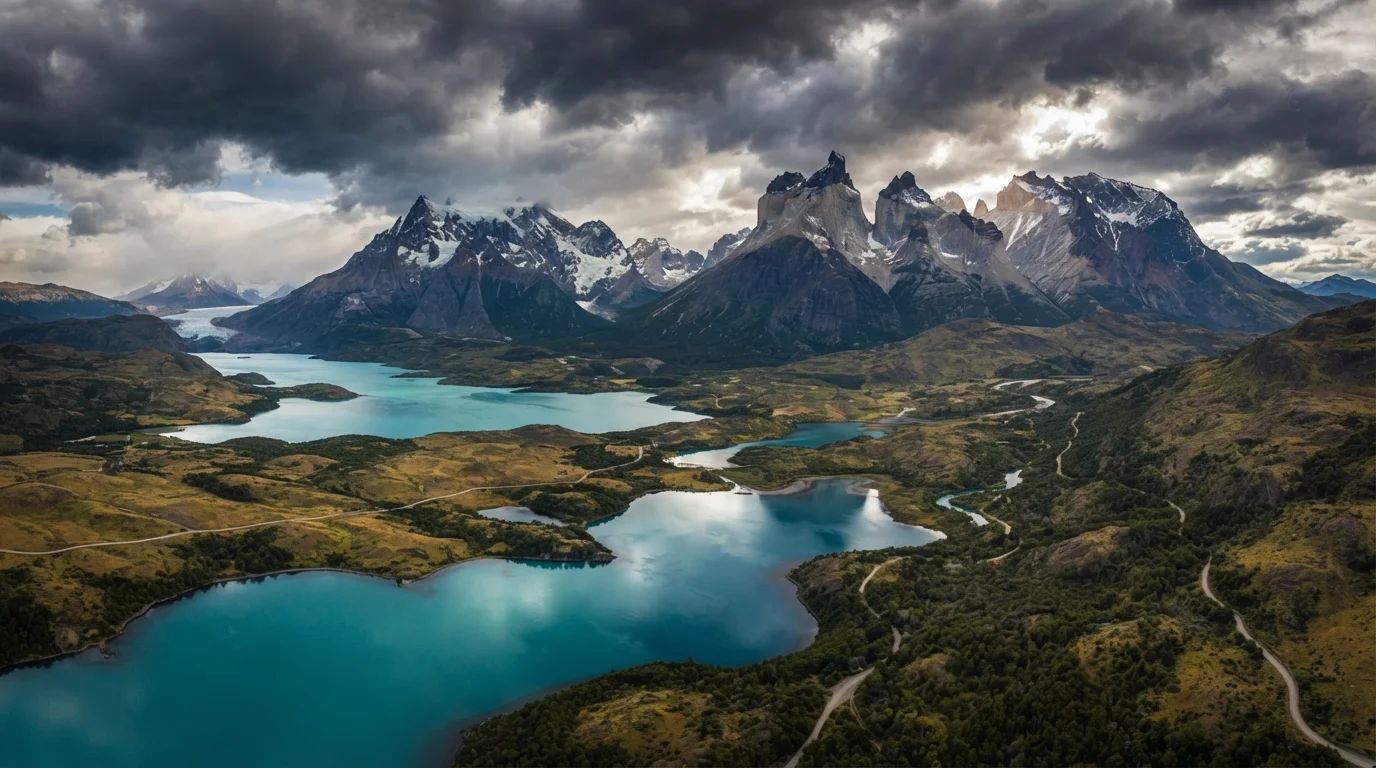
Few places on Earth deliver scenery as relentlessly dramatic as Patagonia. The Andes rise to knife-edged granite towers — most famously the iconic spires of Torres del Paine and the Fitz Roy massif — while to the east, the land flattens into an immense, wind-blasted steppe that seems to stretch to the edge of the world. Between these two extremes lie glacial rivers, mirror-still lakes tinted impossible shades of blue and green, and some of the most extensive temperate rainforests on the planet.
What sets Patagonia apart from other wild places is the scale of everything. The Southern Patagonian Ice Field is the world's second-largest continuous ice mass outside the polar regions, feeding dozens of massive glaciers — including the famous Perito Moreno, which dramatically calves icebergs into Lago Argentino on a near-daily basis. This is geology happening in real time, visible and audible to any visitor willing to make the journey.
~400,000
Square miles of Patagonian wilderness
Patagonia's combined Argentine and Chilean territory makes it one of the largest non-polar wilderness regions on Earth.
2nd largest
Ice field outside polar regions
The Southern Patagonian Ice Field is surpassed in size only by the ice sheets of Antarctica and Greenland.
1.7 million
Acres in Los Glaciares National Park
Argentina's Los Glaciares is a UNESCO World Heritage Site and one of the largest national parks in South America.
Ecosystems and Wildlife That Thrive in Isolation
Patagonia's remoteness is its greatest ecological gift. Because human settlement remains sparse and much of the land is protected within national parks and reserves, native species have been able to persist in remarkable numbers. Guanacos — a wild relative of the llama — roam the open plains in herds. Pumas stalk the rocky terrain of Torres del Paine with little disturbance. Andean condors, with wingspans exceeding ten feet, ride the region's notorious thermal winds overhead.
Marine wildlife is equally extraordinary along the Atlantic coast. Península Valdés in Argentine Patagonia is a UNESCO World Heritage Site where southern right whales, elephant seals, Magellanic penguins, and orcas can all be observed in relatively close proximity. The convergence of cold and warm ocean currents off Patagonia's coast creates a nutrient-rich environment that supports food chains of exceptional diversity.
Protected Land and the Conservation Story
Patagonia has become a global model for large-scale conservation. Chile's Patagonia National Park — created in part through the philanthropic donation of privately held land — added over 700,000 acres to the country's protected areas network. Argentina's network of national parks in the region has similarly grown, linking habitats across vast distances to allow wildlife to move freely.
This commitment to preservation means that visitors experience landscapes operating closer to their natural state than almost anywhere else in the accessible world. Hiking trails are managed to minimize impact, visitor numbers in sensitive areas are sometimes capped, and local communities increasingly participate in conservation-based economies.
Support Low-Impact Travel Practices
When visiting Patagonian parks, stick to marked trails, pack out all waste, and respect posted wildlife guidelines. Many parks now require advance trail reservations during peak season — check official park authority websites well before your trip to secure permits. Choosing locally operated accommodations and guides also helps direct tourism benefits to the communities closest to these landscapes.
Planning Your Journey to the End of the World
Getting to Patagonia takes commitment, which is part of what keeps it wild. International travelers typically fly into Buenos Aires or Santiago before connecting to regional airports like Punta Arenas, Puerto Natales, or El Calafate. From there, distances between attractions remain significant — road journeys of several hours are common, and some areas are only reachable by boat or on foot.
Weather is a defining — and humbling — feature of any Patagonian trip. Wind speeds regularly exceed 60 mph on the open steppe, and a single day can pass through sunshine, sleet, and horizontal rain. Layered, waterproof clothing is essential, and itinerary flexibility can make the difference between a frustrating trip and an unforgettable one. Always check current travel advisories, trail conditions, and entry requirements through official government and park authority sources before departing.
Verify Entry and Safety Information Officially
Border crossing rules, trail access, and park permit requirements in both Argentina and Chile can change with little notice. Before traveling, consult the U.S. Department of State's travel advisories and each country's official park and immigration authority websites for the most current information. This article provides general educational context only and should not be treated as a substitute for up-to-date official guidance.