

Key Takeaways
Territorial Behaviour in Pets
Territorial behaviour refers to actions an animal takes to claim, defend, or mark a specific space as its own. In pets, this can include barking at strangers near the door, urine marking, growling when others approach a food bowl, or blocking access to certain rooms. These behaviours are rooted in survival instincts that evolved long before domestication.
Ethologists classify territory defence as a motivated behaviour driven by resource competition — including space, mates, and food — and modulated by hormones such as testosterone and cortisol, as well as learned reinforcement.
The Instinct Behind the Behaviour
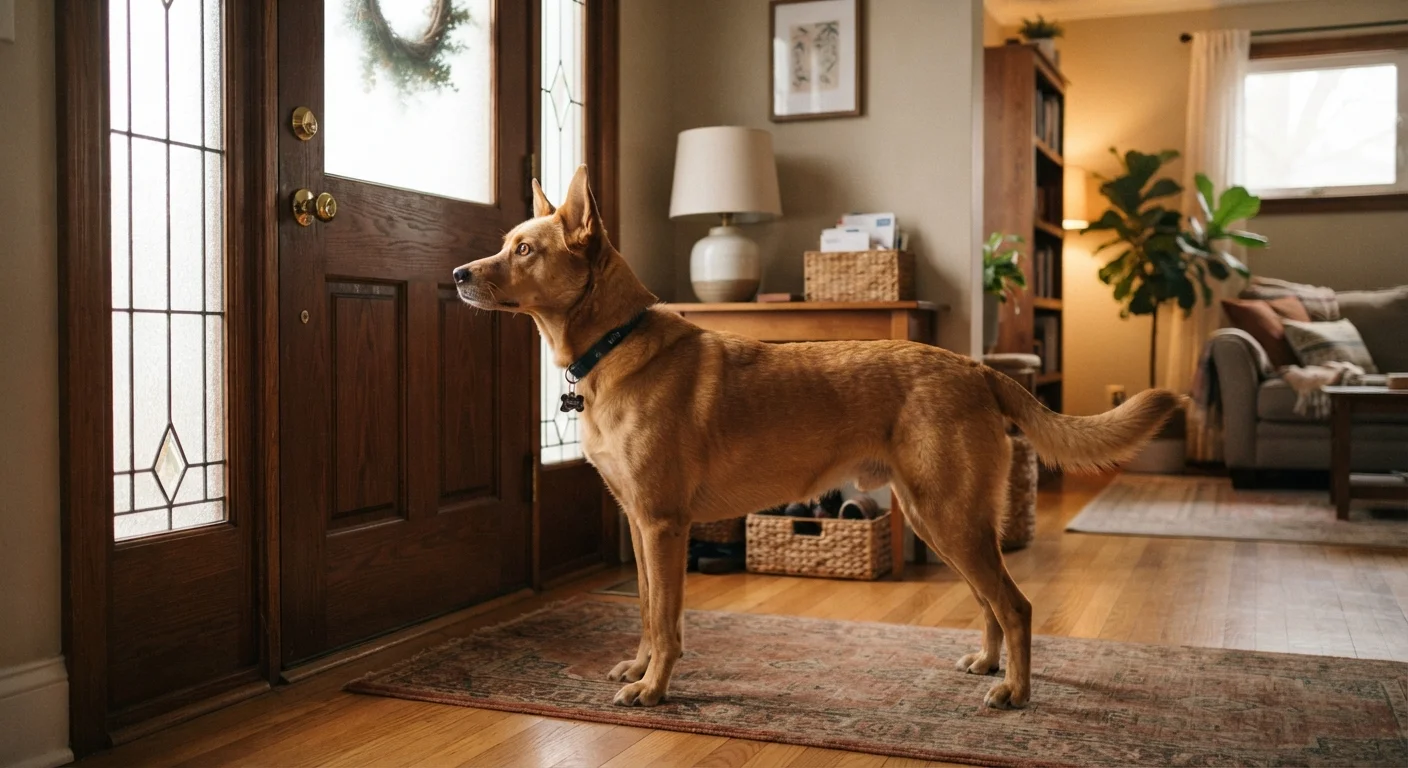
When a dog lunges at the window as a mail carrier approaches, or a cat sprays near the back door after spotting a stray outside, these aren't random outbursts. They're the expression of an evolutionary system built to protect resources and signal ownership to rivals — a system that remains largely intact in domestic animals today.
Territory, from an animal's perspective, is a survival asset. It represents reliable access to food, shelter, and safety. Defending it is not aggression in the clinical sense; it is a motivated, purposeful behaviour shaped over thousands of generations. Understanding this framing is the first step toward responding constructively rather than punitively.
Dogs and cats approach territory through different evolutionary lenses. Dogs are social animals descended from pack hunters whose territory was a shared, collectively defended range. Cats are largely solitary hunters whose ancestors held individual, overlapping territories. These origins explain why a dog may guard the entire perimeter of a yard while a cat focuses on specific high-value micro-spaces — a windowsill, a favourite chair, the area around its litter box.
Territorial Behaviour vs. Fear-Based Reactivity
These two responses can look similar — barking, lunging, growling at perceived threats — but their underlying motivation differs. Territorial behaviour is typically confident and forward-moving; the animal approaches the boundary and projects. Fear-based reactivity often includes retreating, low posture, tucked tails, or wide eyes alongside the vocalisation. Accurate identification matters because the management strategies differ. If you're unsure which you're seeing, a certified professional can help clarify.
What Territorial Behaviour Actually Looks Like
Territorial behaviour in pets shows up across a wide spectrum, from subtle to dramatic. Recognising the signals early gives owners more options to respond before intensity escalates.
- Alarm vocalisation: Barking, growling, or hissing triggered by someone or something approaching a perceived boundary — doorways, yard fences, windows.
- Scent marking: Urine marking, facial rubbing against surfaces, or scratching (in cats) deposits chemical signals that communicate ownership to other animals.
- Resource guarding: Stiffening, growling, or snapping when another animal or person approaches food, toys, resting spots, or a valued human.
- Patrol behaviour: Repeatedly walking and checking the perimeter of a home or yard, particularly after detecting unfamiliar scent.
- Body blocking: Positioning between a perceived intruder and a valued resource, including a human family member.
Many of these behaviours overlap with stress responses, which is why reading early stress signals can help owners distinguish a pet that is assertively territorial from one that is anxious and overwhelmed.
Start With Management, Not Punishment
Punishing territorial responses — shouting, physical correction, or startle devices — rarely addresses the underlying drive and can increase anxiety, worsening the behaviour over time. Instead, focus first on managing the environment: block sightlines to triggering stimuli, separate competing pets, and provide predictable routines. Reward calm behaviour consistently to build a new pattern. If the behaviour doesn't improve, contact your veterinarian.
Common Triggers and How to Respond
Territorial behaviour doesn't occur in a vacuum. Specific situations reliably activate it:
- New animals in the home
- Introducing a second pet disrupts established spatial ownership. Gradual introductions — with separate spaces and scent-swapping before direct contact — reduce the likelihood of conflict.
- Unfamiliar people
- Visitors, delivery workers, and strangers who enter or approach the home cross an active boundary. Teaching a pet a specific place behaviour (such as going to a mat when the doorbell rings) redirects the response productively.
- Changes to the environment
- Moving furniture, home renovation noise, or a shift in household routine can unsettle a pet's sense of spatial security and temporarily elevate territorial responses.
- Resource pressure
- Competition over food, water, or resting spots — real or perceived — amplifies guarding. Providing sufficient, separated resources across multi-pet households reduces friction significantly.
It's worth noting that what looks territorial can sometimes be something else entirely. Common misreadings of pet behaviour include interpreting play arousal or fear-based reactivity as territorial aggression, which leads owners toward the wrong management approach.
When territorial behaviour intensifies to the point of biting or injury, or shows no response to consistent management, the situation moves beyond owner-led correction. Understanding the different types of animal aggression can help clarify when professional support is the right next step.
~30%
Dogs presenting with territorial aggression toward visitors
Studies in applied animal behaviour have consistently identified territorial aggression as one of the most common presenting complaints in canine behaviour consultations.
10%
Reduction in urine marking post-neutering in some cats
Research indicates neutering reduces urine marking in approximately 80–90% of intact male cats, though marking can persist in some individuals regardless of hormonal status.
This article is for general informational purposes only and does not constitute veterinary or behavioural advice. Always consult a qualified veterinary professional regarding your individual pet's health and behaviour.