

Key Takeaways
Small Purchase Tracking
Small purchase tracking means deliberately recording every low-dollar transaction — coffee, snacks, app downloads, impulse buys — rather than only monitoring big expenses like rent or car payments. The goal is to surface the true total of frequent, easy-to-forget spending so your budget reflects reality. Most people underestimate this category significantly, which is why their monthly numbers rarely balance.
In behavioural economics, the underestimation of cumulative small costs is linked to 'attentional bias' — we allocate mental attention to costs in rough proportion to their individual size, not their aggregate impact.
The Invisible Budget Leak
Most budgets account for rent, utilities, insurance, and groceries — the predictable, visible expenses. What they rarely capture is the quiet, constant drain of small daily transactions. A $4 coffee, a $2 parking meter, a $1.99 app, an $8 lunch upgrade. None of these feels significant in the moment. Together, they frequently represent one of the largest unplanned spending categories in a household budget.
This is not a matter of moral failing or poor discipline. It is a structural gap: budgets are typically built around planned costs, while small purchases are almost entirely unplanned and easy to forget before the next statement arrives. The result is a persistent mismatch between what people think they spend and what they actually spend.
If your budget feels consistently tight despite earning enough to cover your planned expenses, untracked small spending is often the first place worth investigating. Our article on where everyday budgets quietly break down explores exactly these patterns in more detail.
$1,497
Average annual US spend on coffee
Figures from financial research and consumer surveys suggest Americans spend roughly this amount per year on coffee purchases outside the home, illustrating how single-item habits accumulate.
~$219/month
Estimated untracked discretionary spending
Consumer finance analyses consistently find that individuals underestimate their discretionary small-purchase spending by $150–$300 per month when budgeting from memory rather than records.
47%
Adults without a monthly spending record
Surveys by financial literacy organisations have found that close to half of US adults do not regularly track their monthly expenditure, leaving significant spending patterns invisible.
Why Our Brains Minimise Small Costs
Human judgment about money tends to be proportional. A $5 purchase next to a $1,500 rent payment feels negligible — and in isolation, it is. The problem is that small purchases do not arrive in isolation. They arrive dozens of times per week, compounding into totals that rival or exceed the line items we treat as significant.
Behavioural economists describe this as a failure of aggregation: we are wired to evaluate purchases one at a time, not as running totals. A useful mental reframe is to ask not "Is $4 a lot?" but "Am I comfortable spending $120 this month on coffee?" — because that is often exactly what daily $4 purchases add up to across 30 days.
“We often focus so much on the big financial decisions that we overlook the smaller ones — which, in aggregate, can matter just as much to long-term financial health.”
— Annamaria Lusardi, Academic Director, Global Financial Literacy Excellence Center (GFLEC)
Tracking forces that aggregation to happen in real time rather than in retrospect. It closes the gap between perception and reality, which is the foundational step in any functional budget. For those building from scratch, our guide to budgeting on a tight income covers how to structure this process even when margins are slim.
What Tracking Actually Does for You
Tracking small purchases does not require eliminating them. Its primary function is informational: it tells you where your money is actually going so you can make deliberate decisions rather than reactive ones.
Start With One Category, Not Everything
If logging every purchase feels daunting, begin by tracking a single category — such as food and drink outside the home — for two weeks. This lower-stakes experiment builds the habit and usually produces a striking enough result to motivate broader tracking. Small starts outperform ambitious systems that get abandoned.
Once you have 30 days of data, patterns become visible. You may find that convenience spending clusters around particular times of day, locations, or emotional states — stress, boredom, social situations. That information is genuinely useful because it lets you address the underlying trigger rather than applying vague spending willpower.
Tracking also separates spending you value from spending you barely remember. Many people discover purchases they genuinely enjoyed and want to protect, alongside others that added nothing they can recall. That distinction — not a blanket spending cut — is where real budget improvement comes from. Pair this habit with the small financial habits that compound over time to build lasting momentum.
Making the Habit Stick
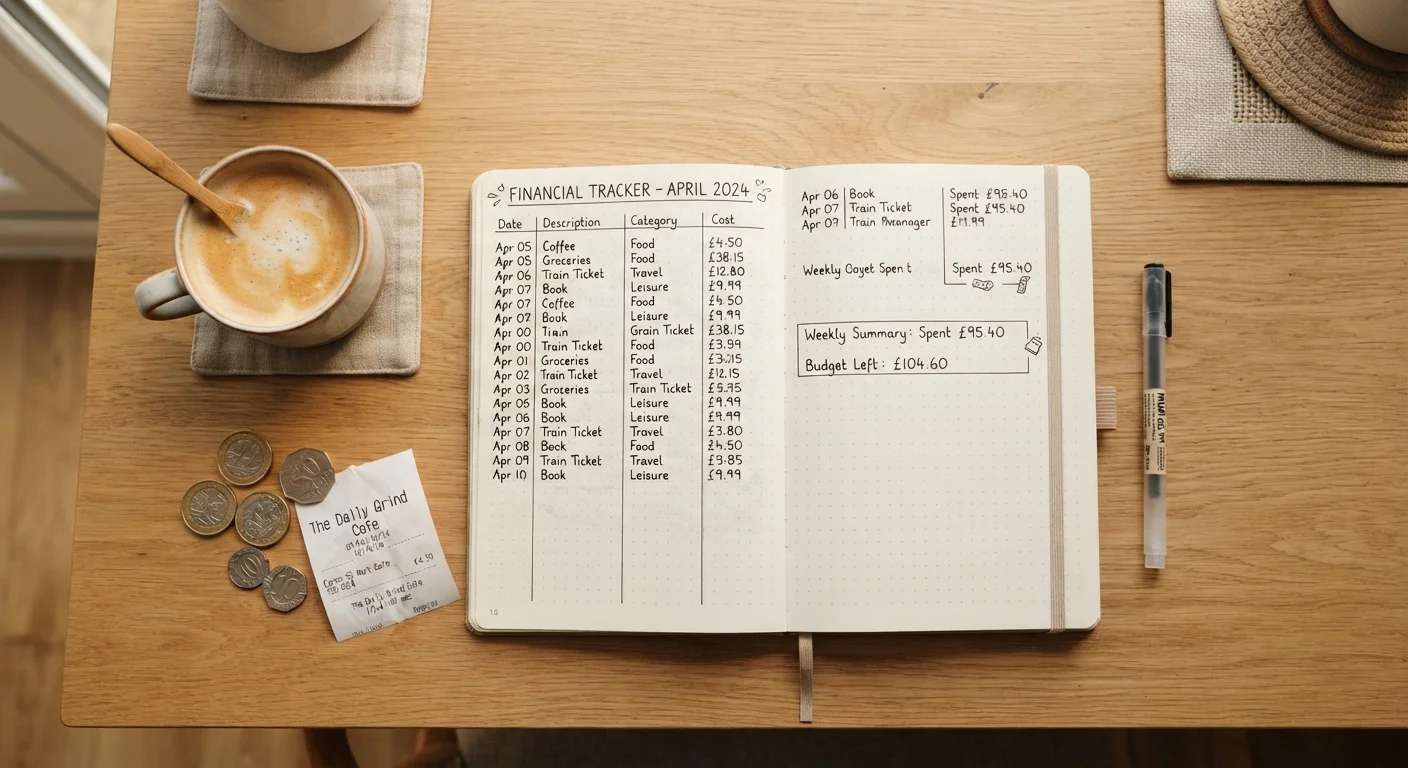
The mechanics of tracking small purchases matter less than the consistency. A note in your phone logged immediately after a purchase is more accurate than a weekly memory exercise. Whatever tool you choose — notebook, spreadsheet, or app — should be immediately accessible at the moment of purchase.
A practical starting point is to dedicate one calendar month to logging every transaction regardless of size. At the end of that period, total your small purchases by category. Most people find this single exercise more illuminating than years of general budgeting because it replaces estimates with evidence.
After establishing your baseline, you can decide how much ongoing tracking serves your goals. Some people find weekly category reviews sufficient once patterns are understood. Others prefer continuous logging as an accountability tool. Neither approach is universally right — what matters is that your budget reflects actual behaviour, not aspirational estimates. For guidance on building habits that last beyond the first month, see our article on habits that keep a budget working long-term.
This article is for general informational and educational purposes only. It does not constitute personalised financial advice. For guidance specific to your financial situation, consider speaking with a qualified financial professional.