

Key Takeaways
Why Building a Budget From Scratch Matters
A budget is simply a plan for your money — a written record of where your income goes before the month runs out. Without one, spending decisions happen reactively, and it's easy to reach the end of the month unsure where the money went. Creating your first budget from scratch gives you a factual baseline: what comes in, what goes out, and what's left.
This process works for any income level. Whether you're just starting out or managing a household, the fundamentals are the same. If you're working with very little margin, the approach in building a budget when you're living paycheck to paycheck offers additional guidance for tighter situations.
What you will need
This article is part of a broader resource on personal budgeting fundamentals if you want to go deeper after completing these steps.
What You'll Need Before You Start
Gathering your materials before you begin saves significant time and ensures your budget reflects reality rather than estimates. The most important inputs are your actual bank statements — not guesses.
Spreadsheet software (e.g., a free tool like Google Sheets)
Organizes income and expense categories and automatically calculates totals and differences.
Bank and credit card statements (2–3 months)
Provides an accurate picture of real spending across all categories.
Calculator
Useful for manual checks and quick arithmetic when reviewing figures.
Envelope or folder for paper bills
Keeps physical statements and receipts organized during the budgeting process.
Don't Rely on Memory for Spending
Estimating your expenses from memory almost always underestimates reality. Pull actual bank and credit card statements for at least the last two to three months before you build your budget — guesswork will produce a plan that fails on contact with real life.
Once you have everything assembled, the seven steps below walk you through the full process in order. Plan for about 30–60 minutes for your first session.
The Seven Steps
Follow these steps in sequence. Each one builds on the last, so skipping ahead tends to produce gaps that cause the budget to break down in practice.
Calculate your total monthly take-home income
Start with what actually lands in your bank account after taxes, not your gross salary. Add all reliable income sources: wages, freelance pay, side income, benefits, or support payments. If your income varies month to month, use a conservative average based on your three lowest recent months rather than your best month.
List every fixed expense
Fixed expenses are amounts that stay the same each month: rent or mortgage, car loan payment, insurance premiums, and minimum debt payments. Write down each one and its exact amount. These obligations come first in your budget because missing them carries real consequences.
Track and categorize variable expenses
Variable expenses shift month to month: groceries, dining out, gas, clothing, entertainment, and personal care. Review your statements and assign each transaction to a category. Calculate a monthly average per category over two to three months. This is where most people are surprised — spending in discretionary categories is frequently higher than expected.
Add savings as a non-negotiable line item
Before you calculate whether your budget balances, add a savings line. Treating savings as an expense — money that leaves your checking account on payday — makes it far harder to skip. Even a modest fixed amount each month builds the habit. Once your budget is stable, you can look at building a more structured savings plan over time.
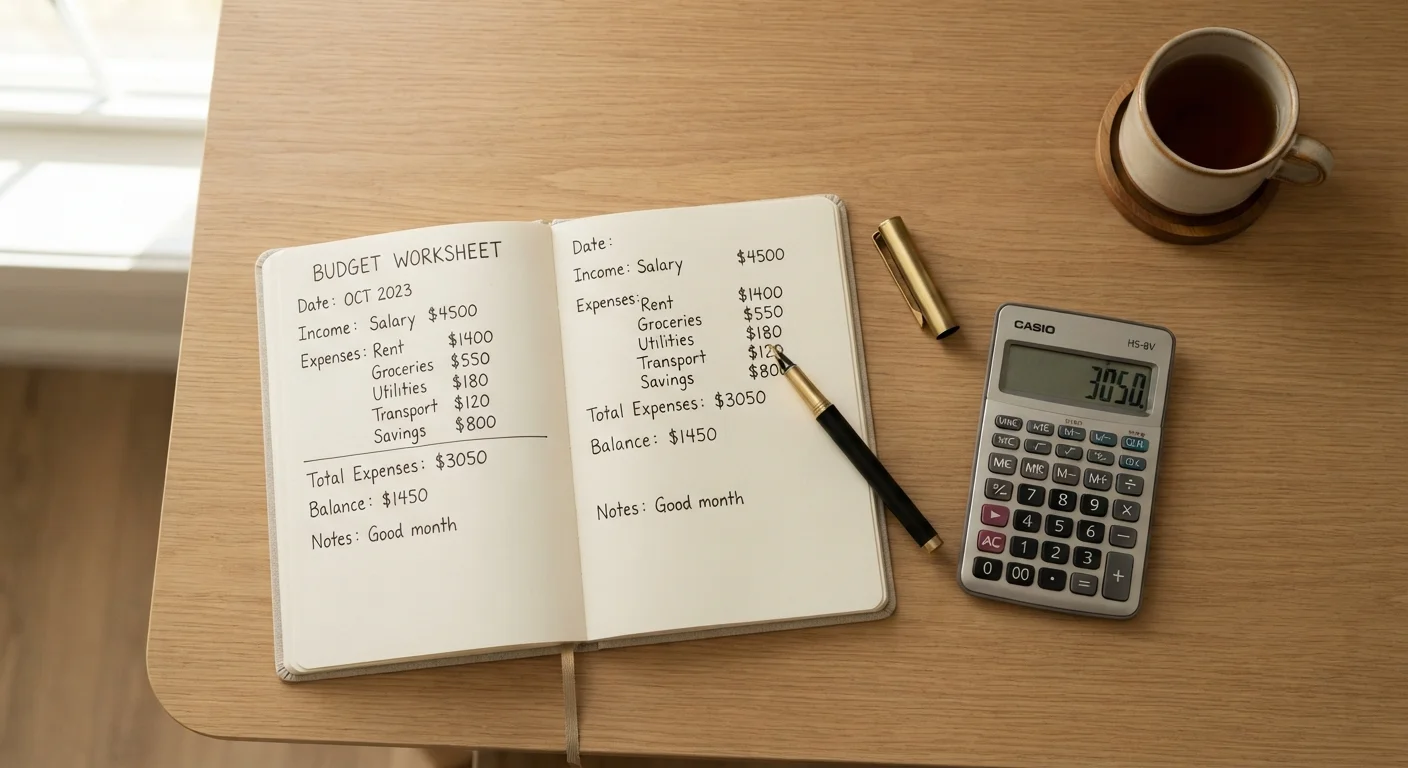
Subtract total expenses from total income
Add up all fixed expenses, variable expense averages, and your savings contribution. Subtract that total from your take-home income. A positive result means you have unallocated money — decide now where it goes rather than letting it drift into unplanned spending. A negative result means your current spending exceeds your income, and you need to identify where to reduce before the plan can work.
Set spending limits for each variable category
Using your averages from Step 3, set a realistic monthly ceiling for each variable category. If your current spending is higher than your income allows, trim lower-priority categories first — discretionary items like dining and entertainment — before touching essentials. Be realistic: a limit set too low is simply ignored. Small, sustainable reductions are more effective than dramatic cuts that don't hold.
Review and adjust after your first full month
At the end of month one, compare what you planned against what you actually spent in each category. Most first budgets need adjustment — that's expected, not a failure. Revise the limits that proved unrealistic, note any categories you forgot, and carry forward what worked. Regular monthly review is what turns a one-time exercise into a lasting financial habit. See habits that keep a budget working long-term for what to focus on after the first month.
Start Simple, Refine Later
Your first budget doesn't need to be perfect. A straightforward spreadsheet or even a notebook works fine. The habit of tracking and reviewing matters far more than the tool you use. Complexity can come later once the habit is established.
When you're done, you'll have a working monthly budget you can refine over time. Pair it with the saving and debt resources available to start putting any surplus to work.
Common Pitfalls to Avoid
First-time budgeters run into a predictable set of problems. Being aware of them in advance makes a difference.
- Forgetting irregular expenses: Annual fees, seasonal costs, and occasional repairs don't appear every month but still need to be planned for. Divide annual amounts by 12 and include them monthly.
- Building an aspirational budget: Setting limits based on how you wish you spent — rather than how you actually spend — produces a budget that feels virtuous and fails immediately. Start from reality.
- Leaving savings out: A budget that allocates every dollar to expenses and nothing to savings isn't a complete plan. Savings belong in the budget from day one, even if the amount is small.
- Abandoning it after one bad month: One overspent category doesn't mean budgeting doesn't work. It means you need to adjust one number. Persistence through imperfection is what builds the habit.
This Is General Financial Education
This article provides general budgeting information for educational purposes and does not constitute personalized financial, tax, or legal advice. Your financial situation is unique. For decisions specific to your circumstances, consult a qualified financial professional.
For a complementary perspective on creating a plan, building a simple personal budget from the ground up covers similar foundations with a slightly different framing.
This article is for general informational and educational purposes only and does not constitute personalized financial advice. Consult a qualified financial professional for guidance specific to your situation.