

Key Takeaways
Why Affordable Nutrition Is Within Reach
A common misconception is that eating healthily requires specialty ingredients or a premium grocery budget. In practice, many of the most nutritious foods — legumes, oats, eggs, frozen vegetables, and canned fish — are also among the least expensive items in any supermarket. The challenge isn't access to healthy food; it's knowing how to identify, combine, and prepare it effectively.
Nutrition science consistently highlights that dietary patterns — the overall combination of foods eaten regularly — matter far more than individual superfoods. This is reassuring news for budget-conscious eaters: a varied, balanced plate built from affordable staples can meet most nutritional needs without exotic or costly items. For a grounded foundation on what a nutritious plate actually looks like, see our guide to building a balanced plate.
This article provides general nutrition information for educational purposes. It is not a substitute for personalised advice from a registered dietitian or qualified healthcare professional.
Core Practices for Eating Well Without Overspending
The following evidence-informed practices form a practical framework for keeping food costs low while maintaining nutritional quality. None require dramatic lifestyle changes — small, consistent shifts tend to produce the most durable results.
Anchor meals around legumes and whole grains
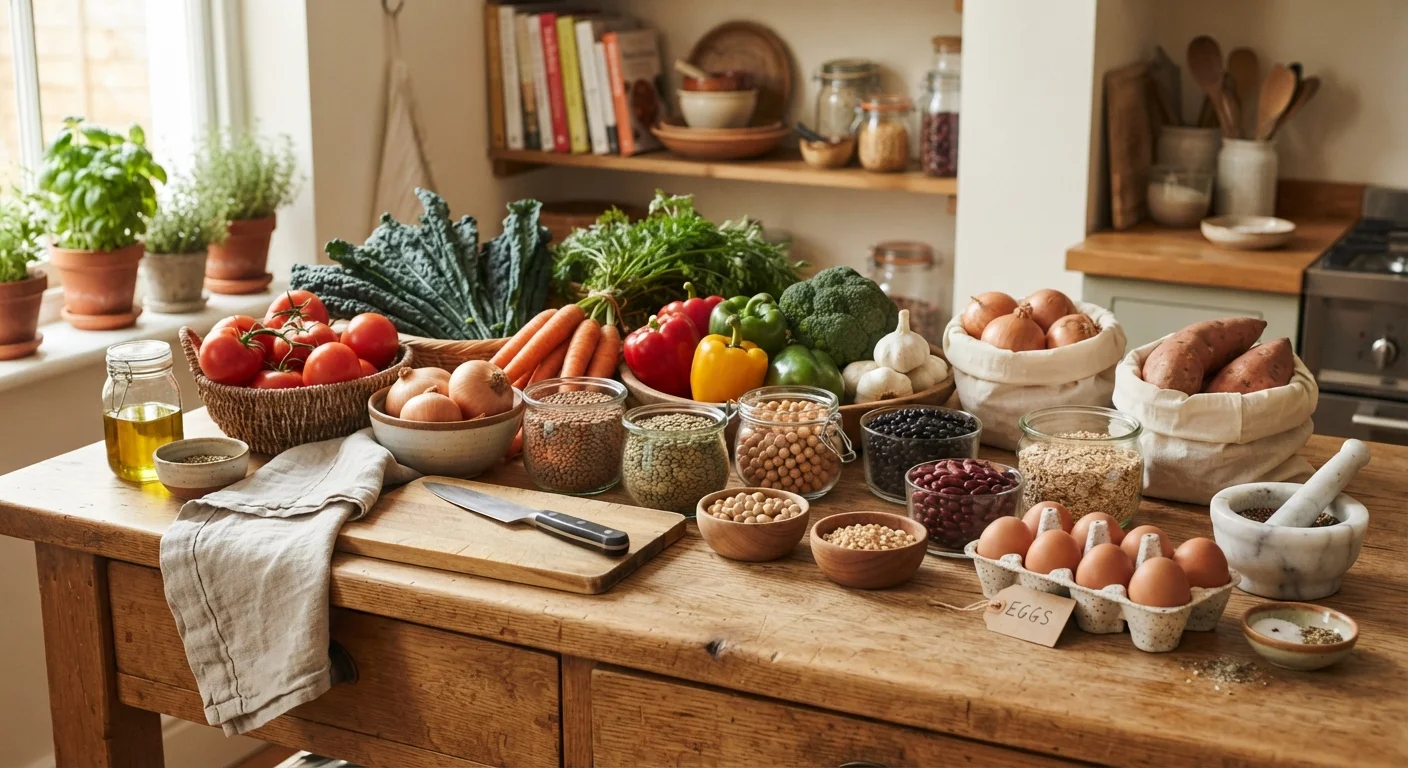
Dried or canned beans, lentils, chickpeas, oats, and brown rice provide substantial protein, fiber, and complex carbohydrates at very low cost per serving. These foods support satiety and are associated with positive cardiovascular and metabolic health outcomes in population-level research.
Shop seasonal produce and use frozen vegetables freely
Frozen vegetables are harvested at peak ripeness and flash-frozen, preserving most of their vitamins and minerals. Studies comparing fresh and frozen produce generally find comparable — and sometimes superior — nutrient retention in frozen options, particularly for vitamins C and B.
Plan meals for the week before shopping
Meal planning is one of the most consistently effective strategies for reducing both food waste and impulse purchases. Knowing exactly what you need means buying less, wasting less, and making better use of ingredients across multiple meals.
Diversify protein sources beyond fresh meat
Eggs, canned sardines or tuna, tofu, edamame, and plant proteins like lentils and chickpeas all deliver significant protein at a fraction of the cost of fresh red meat or poultry. Diversifying protein sources also supports dietary variety, which is linked to a broader intake of micronutrients.
Buy staples in bulk when storage allows
Dry goods such as oats, dried lentils, whole-grain pasta, rice, and canned goods have long shelf lives and typically cost significantly less per unit when purchased in larger quantities. Bulk buying reduces per-meal cost without requiring more frequent shopping.
Cook at home and batch prepare where possible
Home-cooked meals are generally lower in sodium, saturated fat, and added sugars than restaurant or takeout equivalents, and cost considerably less per serving. Batch cooking — preparing larger quantities at once — reduces the daily time investment and minimises the temptation of costly convenience options.
Quick Wins You Can Start This Week
Not every change needs to be sweeping. These immediate actions can lower your grocery bill and improve nutritional quality without overhauling your routine.
Store Brands Are Nutritionally Equivalent
For staples like canned beans, frozen vegetables, oats, and canned fish, store-brand or generic products typically meet the same food safety and nutrition standards as name-brand equivalents at meaningfully lower prices. Reading the nutrition label is a more reliable guide than brand recognition. Switching consistently to store brands on shelf-stable items is one of the simplest, most repeatable ways to reduce grocery spending without sacrificing nutritional quality.
The Bigger Picture: Food Costs and Financial Health
Food spending sits within a broader household budget, and small efficiencies here can ripple outward. If grocery costs are a persistent pressure point, it may be worth reviewing your overall spending structure. Our complete guide to personal budgeting offers a practical starting point, and for those managing on a very tight margin, building a budget paycheck to paycheck addresses prioritising essentials first.
~$1.50
Average cost per serving of dried legumes
USDA Economic Research Service data consistently places dried beans and lentils among the lowest cost-per-nutrient foods available in US grocery stores.
30–40%
Estimated household food waste in US homes
According to USDA estimates, American households waste roughly 30–40% of the food supply, representing a significant area where meal planning can recover budget and nutrition.
Sustainable food habits, like sustainable financial habits, tend to be consistent rather than extreme. Restrictive approaches — whether dietary or budgetary — often unravel. For more on why extreme dietary restrictions frequently backfire, see our article on why crash diets tend to backfire.
Plant-Based Doesn't Mean Nutritionally Incomplete
A common concern about affordable, plant-forward diets is whether they provide adequate protein and key micronutrients like iron, zinc, and B12. In practice, varied plant-based diets built around legumes, whole grains, nuts, seeds, and fortified foods can meet most nutritional needs for many people. However, certain nutrients — particularly vitamin B12 — are not reliably available from plant sources and may require supplementation. Anyone considering a predominantly plant-based diet, especially those in particular life stages such as pregnancy or older adulthood, should consult a registered dietitian. For a deeper look at the evidence, see our article on what the research says about plant-based eating.