

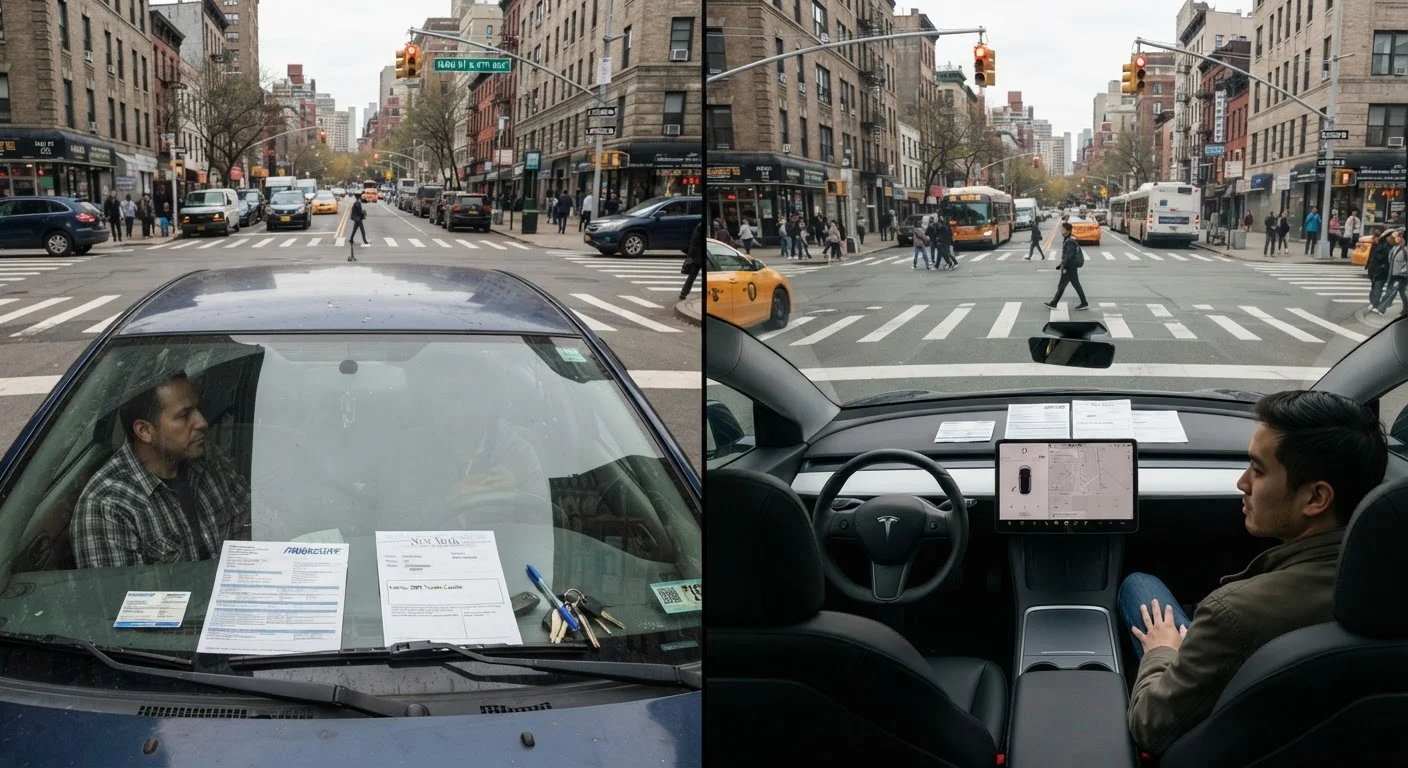
Key Takeaways
Option A
Liability-Only Coverage
The legally required minimum — focused on protecting others.
Best for: Drivers with older, lower-value vehicles who can absorb the cost of repairing or replacing their own car out of pocket.
Option B
Full Coverage
Comprehensive protection that also covers your own vehicle.
Best for: Drivers with newer or financed vehicles who need protection against collision damage, theft, and weather-related losses.
If you drive a paid-off vehicle worth under $4,000
Liability-Only Coverage
When a vehicle's market value is low, comprehensive and collision premiums may exceed the insurer's payout after depreciation. Carrying liability-only can be the more cost-efficient choice.
If your vehicle is financed or leased
Full Coverage
Lenders and leasing companies contractually require full coverage to protect their financial interest in the vehicle. Dropping below this level typically violates the loan or lease agreement.
If you could not afford to replace your car after a total loss
Full Coverage
Comprehensive and collision coverage provide a financial safety net. Without them, a single accident or weather event could leave you without transportation and without recourse.
If you have substantial savings set aside for emergencies
Liability-Only Coverage
Drivers who can comfortably self-fund repairs or a vehicle replacement may rationally choose liability-only on an older car and redirect the premium savings elsewhere.
What Each Coverage Level Actually Includes
Auto insurance is not a single product — it is a layered structure, and understanding what each layer does is the foundation of any smart coverage decision.
Liability-only coverage is the baseline required by law in nearly every U.S. state. It pays for bodily injury and property damage that you cause to other people in an at-fault accident. It does not pay a cent toward your own vehicle repairs, your own medical bills, or a replacement car if yours is stolen or destroyed by a storm.
Full coverage is an informal term — not a defined policy type — that typically refers to liability insurance paired with two additional coverages:
- Collision: Pays to repair or replace your vehicle after an accident, regardless of fault.
- Comprehensive: Covers non-collision losses such as theft, vandalism, fire, flooding, hail, and animal strikes.
Many full coverage policies also include uninsured/underinsured motorist protection and medical payments coverage, though these vary by state and insurer. For a broader look at how coverage gaps catch drivers off guard, see our piece on common auto insurance myths.
| Criterion | Liability-Only | Full Coverage |
|---|---|---|
| Covers damage to others | Yes | Yes |
| Covers your own vehicle damage | No | Yes (collision) |
| Covers theft or weather damage | No | Yes (comprehensive) |
| Required by lenders/lessors | No | Yes |
| Typical monthly premium | Lower | Higher |
| Deductible applies | No | Yes |
| Best suited for | Older, low-value vehicles | Newer or financed vehicles |
The Financial Calculus: When Each Option Makes Sense
The right coverage level is ultimately a financial decision — one that weighs your vehicle's current market value against the cost of carrying additional protection.
A frequently cited rule of thumb is to reconsider comprehensive and collision coverage when the combined annual premium for those two components exceeds 10% of the vehicle's actual cash value (ACV). Because insurers pay out based on ACV — not what you originally paid — an aging vehicle's coverage ceiling shrinks steadily even as premiums remain relatively stable.
~$700
Average annual cost of comprehensive and collision coverage
According to the National Association of Insurance Commissioners (NAIC), the combined average expenditure for collision and comprehensive coverage has historically hovered near this range, though individual rates vary widely by state, driver profile, and vehicle.
1 in 8
U.S. drivers estimated to be uninsured
The Insurance Research Council has estimated that roughly one in eight motorists on U.S. roads carries no insurance, underscoring the value of uninsured motorist protection within a full coverage policy.
Conversely, full coverage makes strong financial sense when a vehicle is new, financed, or would be genuinely difficult to replace. Lenders require it for a straightforward reason: the vehicle is collateral for the loan. If the car is totaled and you only carry liability, the lender could be left with an unpaid balance and no asset to recover.
It is also worth considering your own risk exposure beyond the vehicle itself. Liability limits that are too low can leave you personally responsible for damages exceeding your policy's cap in a serious at-fault accident. State minimums are often far below what a real-world accident can cost — raising liability limits is often more valuable than drivers realize. If a claim is ever denied, understanding your rights matters — our guide on why insurance claims get denied outlines common reasons and next steps.
Practical Factors to Evaluate Before Deciding
Beyond the vehicle's value, several practical factors influence which coverage level is appropriate for your situation:
- Your deductible tolerance
- Full coverage requires choosing a deductible — typically $250 to $2,000 — that you pay out of pocket before the insurer covers the rest. A higher deductible lowers your premium but increases your immediate financial exposure after a loss.
- Your driving environment
- Drivers in areas with high rates of vehicle theft, severe weather, or dense traffic may find comprehensive and collision coverage more valuable than those in lower-risk settings.
- Who else drives your vehicle
- If you regularly lend your car to others, understanding how your policy responds is essential. Our article on lending your car and insurance coverage explains how permissive use and exclusions interact.
- Gap coverage for newer vehicles
- If you owe more on a loan than the vehicle is currently worth — common in the early years of financing — gap insurance covers the difference between the ACV payout and your remaining loan balance. This is separate from standard full coverage and worth asking about.
State Minimum Liability Limits Vary Widely
Every state sets its own minimum liability coverage requirements, expressed as limits for bodily injury per person, per accident, and property damage. Some states require additional protections such as personal injury protection (PIP) or uninsured motorist coverage. Always verify your state's current minimum requirements before selecting a policy, and consider whether those minimums adequately protect your personal assets in a serious at-fault accident.
This article provides general educational information about auto insurance coverage types and is not a substitute for advice from a licensed insurance professional. Coverage terms, minimums, and requirements vary significantly by state and individual policy. Always review your specific policy documents and consult a licensed agent for guidance tailored to your situation.