

Key Takeaways
Tyre Wear Patterns
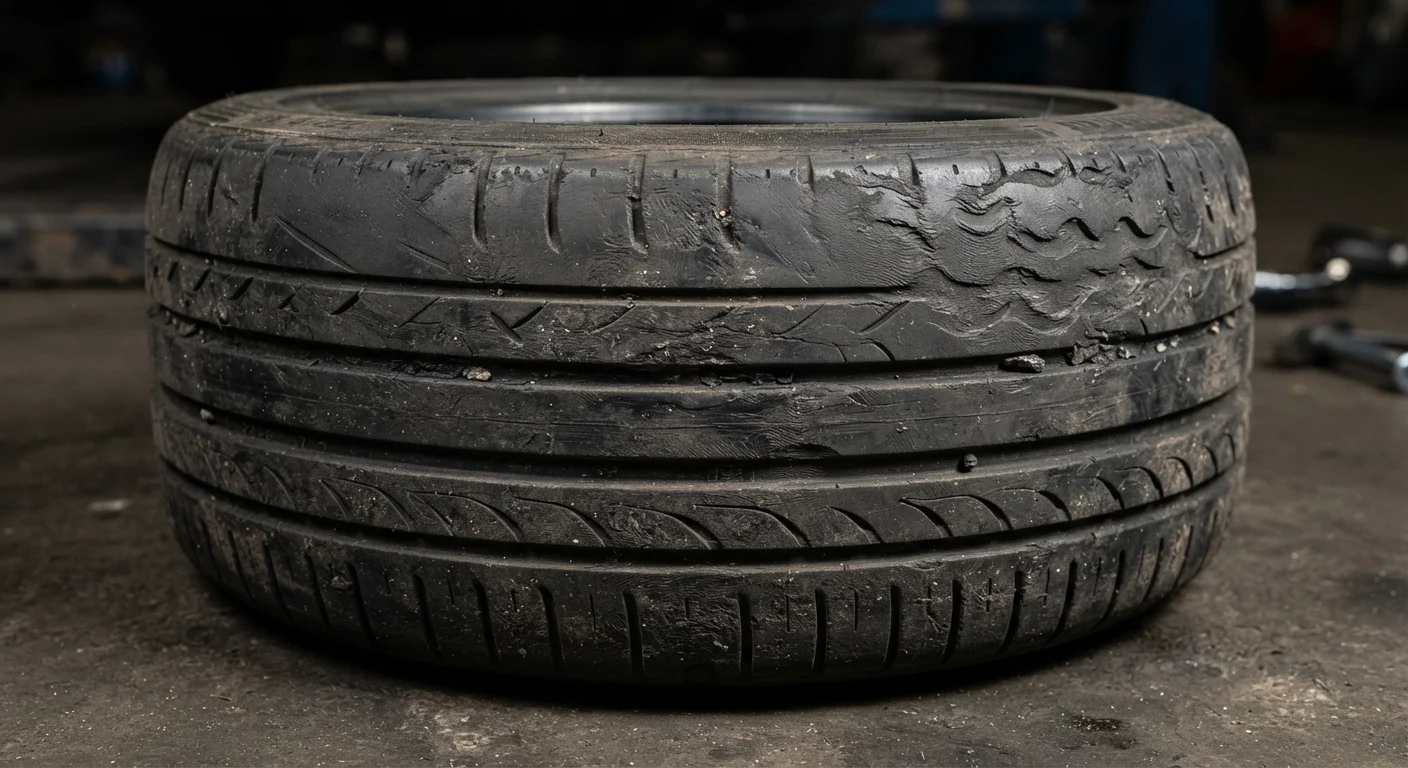
Tyre wear patterns refer to the way a tyre's tread surface wears down over time. Rather than wearing evenly across the full width of the tread, tyres sometimes develop distinct patterns of wear — on the edges, in the center, or in irregular patches. These patterns are not random; they reflect how the tyre is making contact with the road, which in turn reveals information about tyre pressure, wheel alignment, suspension condition, and driving habits.
Tread depth is measured in 32nds of an inch in the U.S.; the legal minimum is typically 2/32", though many safety experts recommend replacement at 4/32" for improved wet-road braking.
Why Tyre Wear Is Worth Reading
Most drivers notice their tyres are worn when the tread looks thin or when the vehicle starts to feel different on wet roads. But the pattern of that wear tells a far more specific story. Tyres act as a contact record between your vehicle and the road, and the way they wear reflects the forces acting on them every mile you drive.
Understanding tyre wear patterns is one of the most practical diagnostic skills a driver can develop. It doesn't require special tools — just knowing what to look for during a routine visual check. Catching a problematic wear pattern early can prevent expensive mechanical repairs and reduce safety risk on the road.
2/32"
Minimum legal tyre tread depth in most U.S. states
The National Highway Traffic Safety Administration (NHTSA) uses this threshold as the legal wear-out limit, though replacement at 4/32" is commonly advised for safer wet braking.
~25%
Vehicles estimated to have at least one significantly under-inflated tyre
NHTSA data has consistently shown that a substantial proportion of passenger vehicles on U.S. roads operate with tyre pressures outside the recommended range.
5,000–7,500 mi
Typical recommended tyre rotation interval
Most vehicle manufacturers and tyre associations recommend this rotation frequency to promote even tread wear across all four positions.
The Most Common Tyre Wear Patterns Explained
Centre Tread Wear
When the centre of the tyre wears faster than the edges, over-inflation is usually the cause. An over-inflated tyre bulges slightly in the middle, putting more contact pressure on the central tread band and lifting the edges away from the road surface. The fix is straightforward: check and correct tyre pressure to the vehicle manufacturer's specification, found on the sticker inside the driver's door jamb.
Edge-to-Edge Wear (Both Shoulders)
When both outer edges of a tyre wear faster than the centre, the tyre has been consistently under-inflated. A soft tyre flexes excessively, pushing more contact area onto the shoulders. Beyond accelerated wear, under-inflation generates heat and can compromise tyre structure over time. Checking tyre pressure monthly — and before long trips — addresses this pattern at its source.
One-Sided or Inner/Outer Edge Wear
Wear concentrated on just one side of a tyre — either the inner or outer edge — almost always indicates a wheel alignment problem. Specifically, it points to an incorrect camber angle. Negative camber (top of wheel tilted inward) causes inner edge wear; positive camber causes outer edge wear. Suspension component wear, such as deteriorating ball joints or control arm bushings, can also produce this pattern.
Check Tyre Pressure When Tyres Are Cold
Tyre pressure readings are most accurate when the tyres are cold — meaning the vehicle has been parked for at least three hours and driven fewer than a mile. Heat from driving increases pressure temporarily, which can lead to inaccurate readings. Always compare your reading against the manufacturer's recommended PSI found on the driver's door jamb sticker, not the maximum pressure listed on the tyre sidewall.
Cupping or Scalloping
Cupping appears as a series of high and low spots around the tyre tread, creating a wavy or scooped surface. This rhythmic pattern is typically caused by worn or failing shock absorbers or struts that allow the tyre to bounce unevenly against the road. It may also result from an out-of-balance tyre or wheel. Cupped tyres often produce a rumbling noise at highway speed.
Patchy or Flat Spot Wear
Flat spots in isolated areas of the tread usually result from hard braking events that caused the tyre to slide rather than roll — common in vehicles without ABS. They can also develop if a vehicle sits stationary for extended periods under load, causing the tyre to develop a temporary flat-contact deformation.
What to Do When You Spot Abnormal Wear
Identifying a wear pattern is only the first step. The critical action is addressing the root cause — replacing a tyre without fixing the underlying issue will simply wear out the new tyre in the same pattern.
If you observe any of the patterns described above, have a qualified mechanic inspect the vehicle. An alignment check, suspension inspection, and tyre pressure assessment are all relatively low-cost services that can prevent far more expensive repairs down the road. Tyre rotation on a regular schedule — typically every 5,000 to 7,500 miles — remains one of the most effective ways to promote even wear across all four tyres.
This article is for general informational purposes only. Always consult a qualified automotive technician for diagnosis and repair of any vehicle issues.